Skip to content

The Quick Version
- Commercial roller shutters are identified by convicted burglars as one of the most effective physical deterrents against break-ins — Australian Institute of Criminology research confirms this directly.
- External shading devices like roller shutters can block up to 90% of solar heat gain through windows, according to the Australian Government’s YourHome guide.
- HVAC accounts for roughly 39% of total energy consumption in Australian commercial buildings. Reducing that load pays for itself.
- Foam-filled aluminium shutters can reduce perceived noise by up to 50% at mid-to-high frequencies — a measurable difference for businesses on busy roads.
- The ATO classifies automatic window shutters as depreciating assets with a 10-year effective life, meaning businesses can claim the cost as a tax deduction.
Ask most business owners what a roller shutter does, and you’ll get a one-word answer: security. And that’s fair. It’s the reason most people buy one.
But here’s what that answer misses. The same installation that stops a smash-and-grab also blocks 90% of solar heat before it touches your glass. It dampens traffic noise in your office. It shields your windows from storm debris in harsh weather. And it quietly lowers your energy bill every single month it’s operational — without anyone thinking about it.
That’s not a lock. That’s not an alarm. That’s an infrastructure upgrade working across five or six problems at once, compounding its return year after year.
This guide breaks down the full range of benefits of roller shutters for your business, backed by Australian government data, peer-reviewed research, and industry evidence. Whether you’re running a retail shopfront, a warehouse, or a clinic on a main road, what follows will reframe how you think about what a shutter actually is — and what it’s quietly worth.
How Roller Shutters Work
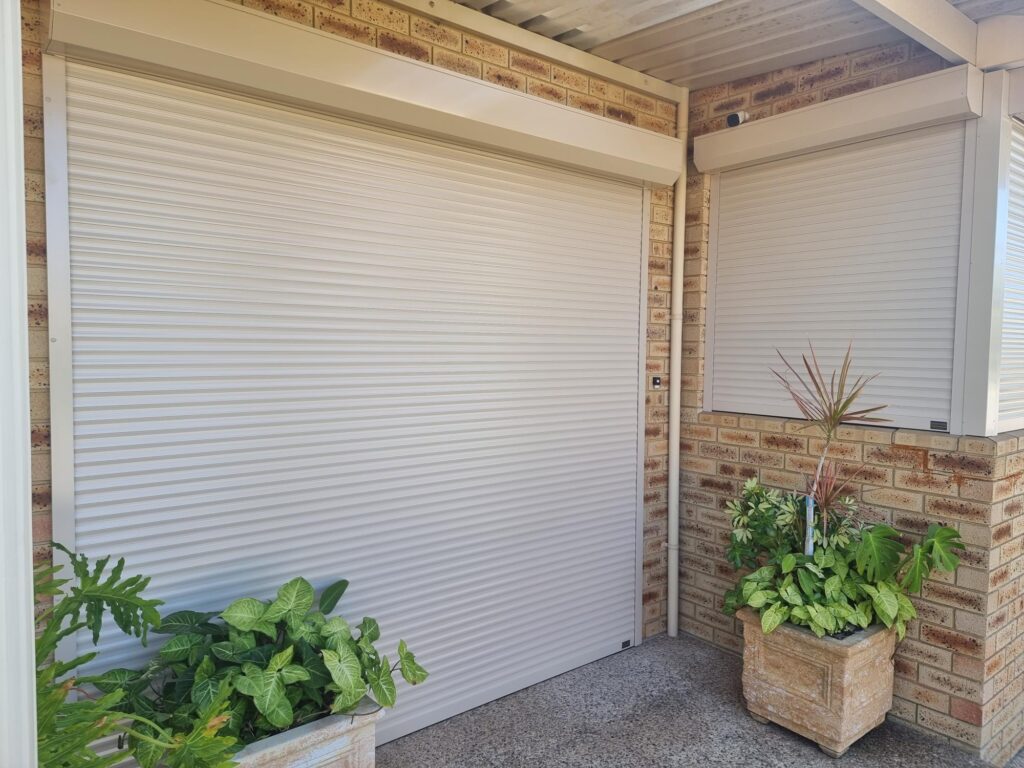
A roller shutter is a door or window covering made from horizontal slats — typically aluminium or steel — that roll into a compact headbox above the opening and descend to form a continuous barrier. They can be operated manually via a crank or strap, or motorised with a wall switch, remote control, or smartphone app.
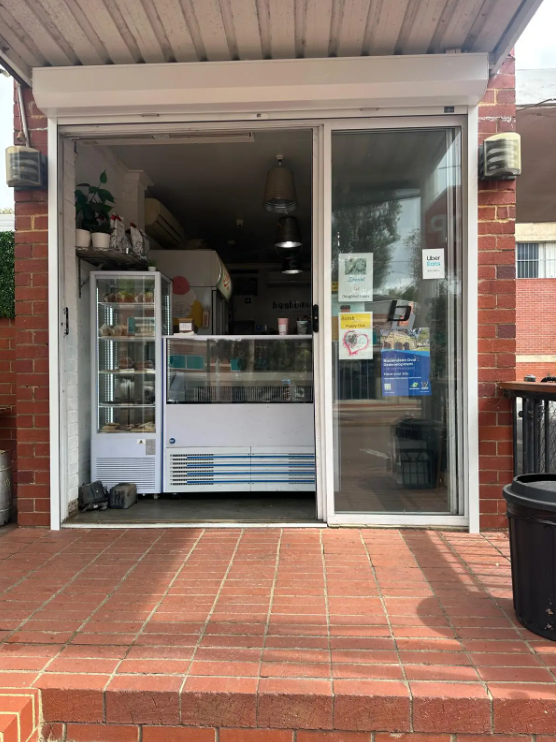
In commercial settings, they’re installed over shopfronts, windows, service counters, loading docks, and warehouse openings. Modern systems range from solid security shutters providing complete block-out to perforated profiles that let light and visibility through while still preventing physical access. If you’re unfamiliar with the different configurations, our guide on types of roller shutters is a useful starting point.
With that covered, here’s what a roller shutter actually delivers — and why each benefit matters more than most business owners realise.
A Barrier Burglars Don’t Want to Fight
Standard glass offers almost no resistance to forced entry. Tempered glass is stronger, but once it fails, it crumbles completely, clearing the opening in a second. A roller shutter rewrites that equation. Interlocking aluminium or steel slats form a continuous physical barrier that absorbs impact energy rather than shattering. Even under sustained attack, the curtain deforms but rarely shears through — the perimeter stays intact.
The Australian Bureau of Statistics recorded over 160,000 unlawful entries across Australia in 2024, with roughly 30% targeting non-residential premises. Retail theft has surged to a 21-year high — theft at retail locations rose from 32% of all recorded thefts in 2010 to 45% in 2024. Commercial properties are firmly in the crosshairs, and property crime clearance rates remain below 20%. Prevention isn’t one option among many. It’s the only strategy that consistently works.
For practical steps you can take alongside shutters, see our guide on burglary prevention tips to keep your property secure.
The Break-In That Never Happens
Physical resistance is only half the story. A roller shutter’s real power is the break-in it prevents from being attempted in the first place.
This principle — target hardening — sits at the core of Crime Prevention Through Environmental Design (CPTED), a framework endorsed by police services across Australia. NSW Police and Victoria Police both explicitly recommend roller shutters in their business security assessment kits.
The logic is simple. Most commercial burglary is opportunistic. Offenders run a rapid risk-reward calculation before committing. A visible roller shutter signals high effort, high noise, specialist tools, and a strong chance of detection — before a single slat has been touched. Research from the Australian Institute of Criminology confirms that convicted burglars identified roller shutters and security screens as effective deterrents during offender interviews.
A solid shutter also eliminates the visual reward. Unlike a glass shopfront displaying inventory to the street at 2 a.m., a closed shutter conceals what’s inside. No temptation, no impulse, no smash-and-grab.
Built for What Australian Weather Throws at You
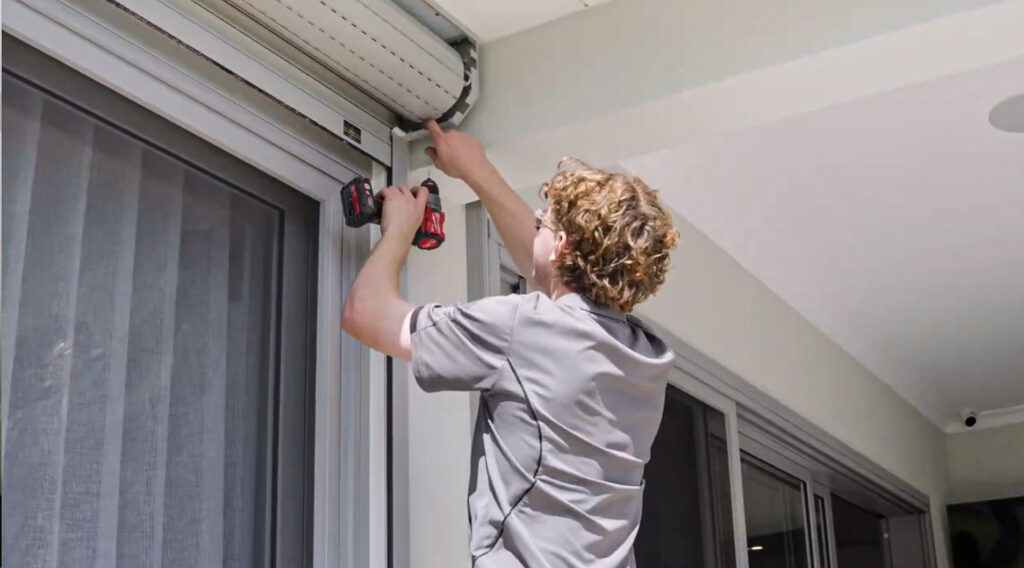
Australia’s climate doesn’t go easy on buildings. From the cyclone-prone north to the bushfire-threatened fringes of Perth, the building envelope absorbs punishment — and without adequate weather protection, windows are always the first to fail.
When the Wind Picks Up
During severe wind events, the primary mechanism of structural failure is often envelope breach. If a window fails on the windward side, internal pressure spikes instantly, creating a lifting force that can tear the roof off entirely. Protecting glazing isn’t about saving a window. It’s about saving the building.
Roller shutters act as a sacrificial shield — absorbing debris impact and holding the envelope together even if the curtain deforms. In cyclone regions (C and D under AS/NZS 1170.2), specialist cyclone-rated shutters feature wind-lock systems that mechanically interlock every slat into the guide rail, preventing the curtain from being ripped out under extreme suction.
Perth sits in Wind Region A1, but businesses in the Pilbara, Kimberley, or northern coastal areas face far more extreme weather conditions and Region C and D requirements — where cyclone-rated shutters aren’t optional, they’re a condition of both safety compliance and insurance validity.
When the Fire Front Approaches
For businesses in bushfire-prone areas, AS 3959 defines the Bushfire Attack Level (BAL) ratings that dictate construction standards. From BAL-29 onwards, roller shutters become the most practical compliance pathway for protecting window openings against radiant heat and ember attack. At BAL-40 and BAL-FZ (Flame Zone), alternatives to shutters are extremely limited and significantly more expensive.
Perth’s urban centre is mostly BAL-LOW, but the Perth Hills and outer eastern suburbs contain significant bushfire-prone land. Businesses in these zones need shutters rated to the correct BAL level, installed with minimal gaps to prevent ember ingress.
Your Biggest Energy Cost — and How Shutters Cut It
This is where most business owners genuinely don’t see it coming. The energy savings from roller shutters are measurable, significant, and ongoing — and the science behind them is more compelling than you’d expect.
Windows are the thermal weak point of any commercial building. In summer, solar radiation passes through the glass, heats interior surfaces, and is re-radiated as long-wave infrared that the glass traps inside. The greenhouse effect is working against you. In winter, internally generated heat conducts straight through cold glass and escapes.
The Australian Government’s YourHome guide confirms that external shading devices like roller shutters can block up to 90% of solar heat gain through windows. That matters because HVAC systems consume approximately 39% of total energy in Australian commercial buildings, according to the Department of the Environment’s HVAC factsheet.
Here’s the detail that shifts the conversation. Internal blinds and curtains block light after it has entered the room — meaning the heat is already inside. External shading intercepts it before it hits the glass. The difference is stark. Research cited by the Window Shading Association of Australia found that internal venetian blinds saved roughly 10% of HVAC energy. The same device fitted externally saved 43% — more than four times the benefit. The NCC doesn’t even consider internal shading a reliable method for improving a building’s energy rating. External shading is the superior approach, full stop.
In winter, a closed shutter creates a dead air space between the curtain and the glass. Still air is an excellent insulator. Combined with the polyurethane foam core in aluminium slats, this trapped layer reduces heat loss and helps retain warmth — a year-round efficiency gain that compounds silently over the life of the product.
Turn Down the Street, Not the Productivity
As Australian cities densify, external noise from traffic, construction, and aircraft becomes a genuine drag on productivity and customer experience. For businesses where the working environment matters — medical clinics, law firms, day spas, open-plan offices — noise control is far from a luxury.
Foam-filled aluminium shutters attack noise through three mechanisms: the mass of the shutter adds a physical sound barrier, the polyurethane foam core absorbs sound energy rather than transmitting vibration, and the air gap between the shutter and window acts as an acoustic decoupler.
Quality foam-filled shutters can reduce perceived noise by up to 50% at mid-to-high frequencies. Real-world performance typically sits between 8–12 dB across common noise sources. A 10 dB reduction is perceived by the human ear as a halving of volume. For a business on a busy arterial road at 75 dB, that’s the difference between a workspace people endure and one they can actually think in.
Control What People See — and What the Sun Does
Not every benefit needs a stat behind it. Sometimes the value is simply in having control.
Roller shutters let you manage privacy, light levels, and after-hours visibility on demand. A solid profile provides complete block-out — ideal for overnight security, eliminating screen glare, or protecting stock from UV fading. A perforated profile lets filtered light through and allows display lighting to shine outward, turning a closed shopfront into a secure, illuminated billboard after hours.
For businesses that need flexibility between full transparency and total closure, motorised systems make the switch effortless. Modern setups can integrate with building management platforms to automate shading based on time, sun angle, or temperature — reducing HVAC load in the background without a single manual input.
Match Your Brand, Not the Building Next Door
The industrial grey roller door is a relic. Modern aluminium and steel shutters can be powder-coated in virtually any colour, including the full Dulux and Colorbond ranges standard in Australian architecture. The electrostatic powder-coating process produces a finish harder and more UV-resistant than conventional paint — a meaningful advantage under relentless Australian sun.
For retail, perforated profiles with micro-hole patterns maintain 20–40% visibility when closed, preserving streetscape vibrancy and after-hours marketing value. Local councils often prefer these to solid shutters, and customers prefer them too.
Security doesn’t have to look like a fortress. A well-specified shutter delivers genuine aesthetic appeal, integrating into the building’s design language while quietly doing its job behind the scenes.
Negotiate Better Insurance Terms
Insurance premiums are priced on risk. A business that demonstrably reduces its exposure to theft, vandalism, and storm damage has leverage at renewal.
The strongest verified data comes from cyclone-prone regions. The Australian Reinsurance Pool Corporation (ARPC) recognises permanent window shutters as a mitigation measure, offering a 10% discount on the cyclone premium component for properties with shutters on all windows. Suncorp’s Cyclone Resilience Benefit, developed with James Cook University, has delivered up to 20% premium reductions for properties with cyclone-resilient features, including roller shutters.
Outside cyclone regions, the Insurance Council of Australia confirms that insurers may reduce premiums for businesses with physical security measures in place, though specific discounts vary. Ensure your installation is documented in your policy and raise it explicitly with your broker at renewal.
One more thing worth knowing: some insurers include minimum security standards in their Product Disclosure Statements. In high-crime areas, theft cover may be voided entirely if the premises lack adequate physical protection. Roller shutters can be the difference between a valid claim and a nasty surprise.
A Long-Life Asset That Pays You Back
A commercial roller shutter isn’t a consumable. It’s a long-life infrastructure asset with a return that compounds quietly over the years.
High-quality roller shutters built from aluminium are inherently corrosion-resistant — critical in Perth and other coastal environments where salt air eats through ferrous metals fast. Routine maintenance is minimal: an annual service covering track cleaning, silicone lubrication, slat alignment, and motor testing is typically all that’s needed for decades of reliable operation.
The tax position is equally favourable. The ATO classifies automatic window shutters as depreciating assets with a 10-year effective life under Division 40. Motorised components can be claimed as a tax deduction over that period, directly reducing taxable income. For eligible small businesses, the Instant Asset Write-Off provisions may allow the entire cost to be deducted in the first year — improving both the net cost and the cash-flow position of the investment from day one.
When you stack the security savings, energy reductions, insurance benefits, and tax deductions together, the total cost of ownership drops well below the sticker price. Few building upgrades deliver returns across this many categories at once.
Protect Your Business With MCF Master Group
MCF Master Group is a Perth-based specialist in commercial roller shutters, residential roller shutters, and electrical services. Every product in the range — from heavy-duty extruded aluminium security shutters to the LOCKSAFE™ integrated locking system — is built to Australian standards and installed by qualified professionals.
Whether you need overnight protection for a retail shopfront, thermal management for a west-facing office, or cyclone-rated shutters for a regional property, MCF has a solution engineered for the job.
Get in touch with the MCF team for a free, no-obligation site assessment and quote. The sooner your shutters are in place, the sooner they start paying for themselves.
Frequently Asked Questions
How long do commercial roller shutters last?
A well-maintained aluminium roller shutter will typically last 15–20 years or more. Aluminium is naturally corrosion-resistant, which makes it particularly durable in coastal Australian environments. The motorised components may require servicing or replacement earlier, but the curtain, guides, and headbox are built for long-term performance. Annual servicing — cleaning tracks, lubricating bearings, and checking alignment — is usually all that’s needed.
Can roller shutters really reduce my energy bills?
Yes, and the evidence is stronger than most people expect. The Australian Government’s YourHome guide confirms that external shading devices like roller shutters can block up to 90% of solar heat gain through windows. Given that HVAC accounts for roughly 39% of energy consumption in Australian commercial buildings, even a modest reduction in cooling load produces meaningful savings. Research from the Window Shading Association of Australia found external shading devices save more than four times the energy of equivalent internal blinds.
Are roller shutters noisy to operate?
Modern motorised systems are designed for quiet, smooth operation. Tubular motors housed inside the axle produce minimal noise during opening and closing. Manual systems using a crank or strap can be louder, particularly on larger openings. If noise is a concern — for example, in a medical clinic or office — motorised operation is the way to go. For a full comparison, see our guide on manual vs electric roller shutters.
Do I need council approval to install roller shutters?
In many cases, yes — particularly for external shutters on street-facing shopfronts. Many Australian local councils have planning controls governing streetscape amenity. Solid, industrial-looking shutters on a high-street frontage may be restricted because they create a “dead frontage” that impacts pedestrian experience. Perforated or open-grille profiles that maintain visibility are generally more acceptable. Always check with your local council before installation.
Will roller shutters lower my insurance premiums?
They can, particularly in cyclone-prone regions where the ARPC offers a verified 10% discount on cyclone premiums for properties with shutters on all windows. Outside cyclone zones, the Insurance Council of Australia confirms insurers may reduce premiums for businesses with physical security measures, though specific discounts vary. At a minimum, documenting your installation with your broker strengthens your risk profile and ensures your coverage remains valid at claims time.