Skip to content

- HVAC systems consume approximately 39% of total energy in Australian commercial buildings according to the Department of the Environment’s HVAC factsheet, and unprotected windows are the single biggest driver of that load.
- External shading devices like roller shutters can block up to 90% of solar heat gain through windows, according to the Australian Government’s YourHome guide.
- Australia recorded approximately 155,000 unlawful entries in 2024, with roughly one-third targeting non-residential premises.
- LED lighting upgrades typically deliver 60–80% energy savings over legacy fluorescent and metal halide systems, with payback periods of six months to three years.
- The ATO’s $20,000 instant asset write-off for eligible small businesses remains available until 30 June 2026, allowing immediate deductions on security and energy upgrades.
Every business owner understands that revenue is only half the equation. The other half, the half that quietly determines whether your operation stays viable long-term, is overhead.
And right now, overhead is winning. WA commercial electricity rates hit 32.24 cents per kWh under Synergy’s L1 Business Plan tariff from July 2025, with a further 2.5% increase applied to regulated business rates. The ABS Producer Price Index rose 3.5% in the year to December 2025, with electricity supply flagged as a key driver. Property crime clearance rates remain below 20% nationally, which means prevention is the only reliable strategy for protecting your premises.
Most advice on how to cut costs in business starts with the obvious: cancel unused subscriptions, renegotiate supplier contracts, and review headcount. That’s all reasonable, but it rarely moves the needle enough. The highest unnecessary costs in a commercial operation tend to be baked into the building itself — energy bills inflated by poor thermal performance, insurance premiums driven up by inadequate security, and repair invoices that follow preventable break-ins.
This guide breaks down how to reduce costs by making your building envelope, lighting grid, and security perimeter work harder, backed by Australian government data and independent research.
The Energy Drain You’re Not Seeing
Your air conditioner is doing exactly what you asked it to do. The issue is that unprotected glass on every side of the building makes it a fight the system was never going to win on its own.
The Department of the Environment’s HVAC factsheet puts HVAC at 39% of a typical office building’s total energy use, the single largest expense category. And the reason it works so hard is almost always the same: unprotected glass.
Windows are responsible for up to 87% of heat gain in Australian buildings, according to the federal YourHome guide. In summer, sunlight passes through the glass and heats up everything inside, floors, furniture, stock. That heat gets trapped, and your air conditioning works overtime to extract it. In winter, the process reverses: warmth generated inside your building escapes straight through the same glass.” Every kilowatt-hour your HVAC burns fighting those losses is money leaving the building.
External shading vs internal blinds
Internal blinds and curtains try to manage the heat that’s already entered the room. External shading intercepts it before it reaches the glass. The gap between them is significant. Research cited by the Window Shading Association of Australia found that internal venetian blinds saved roughly 10% of HVAC energy. The same type of blind fitted on the outside of the building saved 43%.
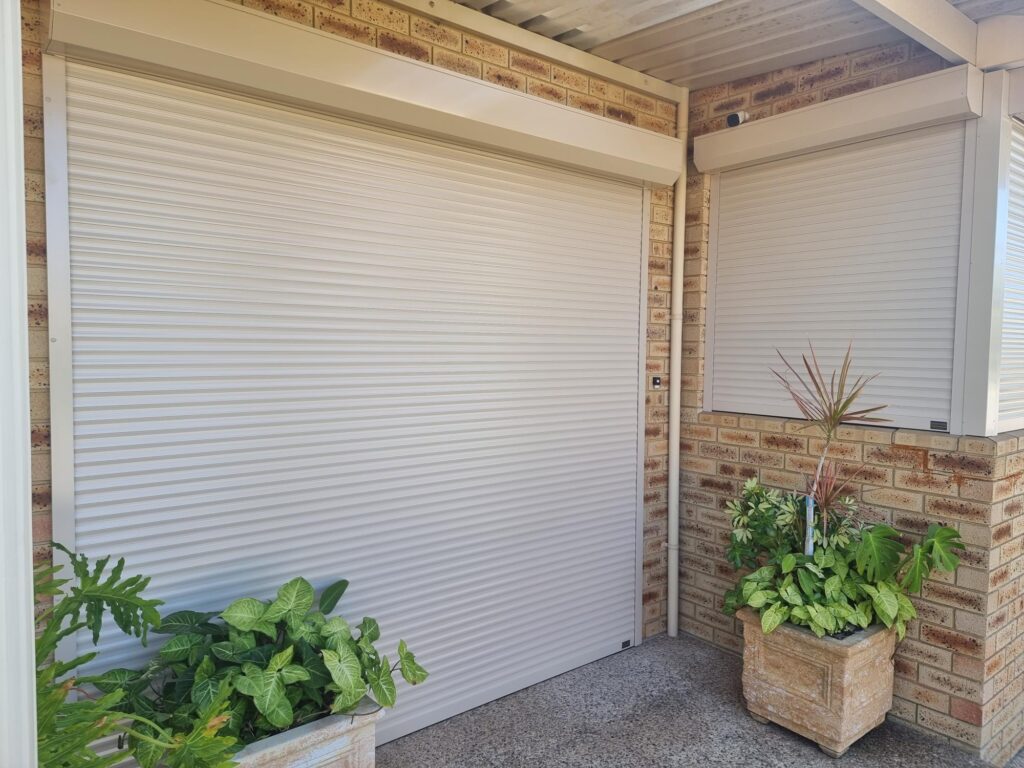
The YourHome guide confirms that effective external shading can block up to 90% of solar heat gain. NatHERS-accredited modelling commissioned by Australian manufacturer Rollashield showed a 27–34% reduction in heating and cooling energy loads when foam-filled aluminium roller shutters were deployed across tested homes in Sydney, Melbourne, and Perth.
For a business paying $15,000–$25,000 annually in cooling costs, even a 25% reduction returns thousands of dollars every year, compounding over the 15–20 year lifespan of a quality shutter system. And for any business serious about how to cut costs in business over the long term, it’s the building envelope that delivers the most reliable returns.
For a deeper look at the thermal science, our guide on whether roller shutters keep heat out breaks down reflectivity, insulation values, and real temperature data.
What a Break-In Actually Costs
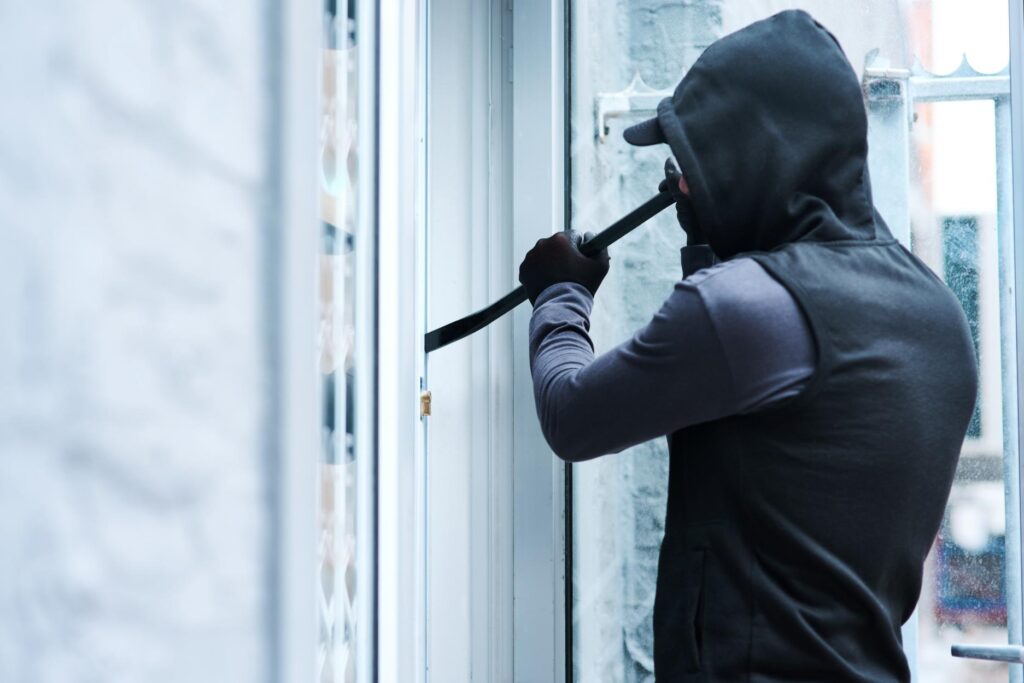
A broken lock and a shattered shopfront can be fixed within a day, but the financial fallout from a commercial break-in tends to stretch on for months.
The Australian Institute of Criminology estimated that burglary costs the Australian economy over $2.2 billion annually in 2011 dollars, with individual incidents averaging approximately $2,900 in direct losses. Adjusted for inflation, that figure sits closer to $4,000 today. But those numbers only capture the tangible: the broken glass, the missing inventory, the locksmith callout.
The indirect business costs are harder to measure and considerably more damaging. AIC research on crimes against Australian small businesses found that victimised businesses reported an average loss of $7,818 across all crime types (in 1999 dollars). When you factor in the knock-on costs, lost trade during closure, insurance excess, emergency callouts, higher premiums, staff overtime, the total frequently runs ten times higher than the initial damage
Physical deterrence is what actually works
Property crime clearance rates sit below 20%. Your alarm can notify someone, and your cameras can record the footage, but neither one physically prevents entry. A solid aluminium roller shutter does.
Research published by the Australian Institute of Criminology (Trends & Issues No. 489) found that active burglars specifically identified roller shutters and security screens as effective deterrents when interviewed about target selection. When an offender sees a shutter, the risk-reward calculation shifts immediately: more time, more noise, a higher chance of detection, more specialist tools required. Most walk away.
That deterrence effect generates its own financial return. Fewer incidents mean lower insurance claims, lower repair bills, and fewer days of lost trade. For practical steps you can pair with physical barriers, see our guide on tips to prevent burglary for your business.
Lower Insurance Premiums
Here’s a line item most business owners accept without question: their insurance premium. But that number is a direct reflection of your risk profile, and a property that reduces its exposure to theft, vandalism, and weather damage has real negotiating power at renewal.
The Insurance Council of Australia confirms that insurers may offer reduced premiums for properties with security devices in place, including deadlocks, window protection, and monitoring systems. In cyclone-prone regions, the Australian Reinsurance Pool Corporation (ARPC) offers a 10% reinsurance premium discount for properties with permanent window protection on all windows, a discount insurers can pass through to policyholders.
Industry estimates suggest 5–15% premium reductions for security-rated roller shutters, with comprehensive systems (CCTV, monitored alarm, physical barriers) achieving 10–20%. Specific discounts vary by insurer and policy, so raise the question explicitly with your broker at renewal and ensure your installation is documented in the policy.
There’s an uglier side to this equation, too. An estimated 70–80% of Australian businesses are underinsured. Most commercial policies require you to insure your property for at least 80–85% of its full replacement value. If you’re below that threshold when you make a claim, the insurer can reduce your payout proportionally, even if the claim itself is well under your cover limit. Investing in physical protection doesn’t just prevent incidents. It keeps you on the right side of your policy when something does go wrong.
LED Lighting Upgrades
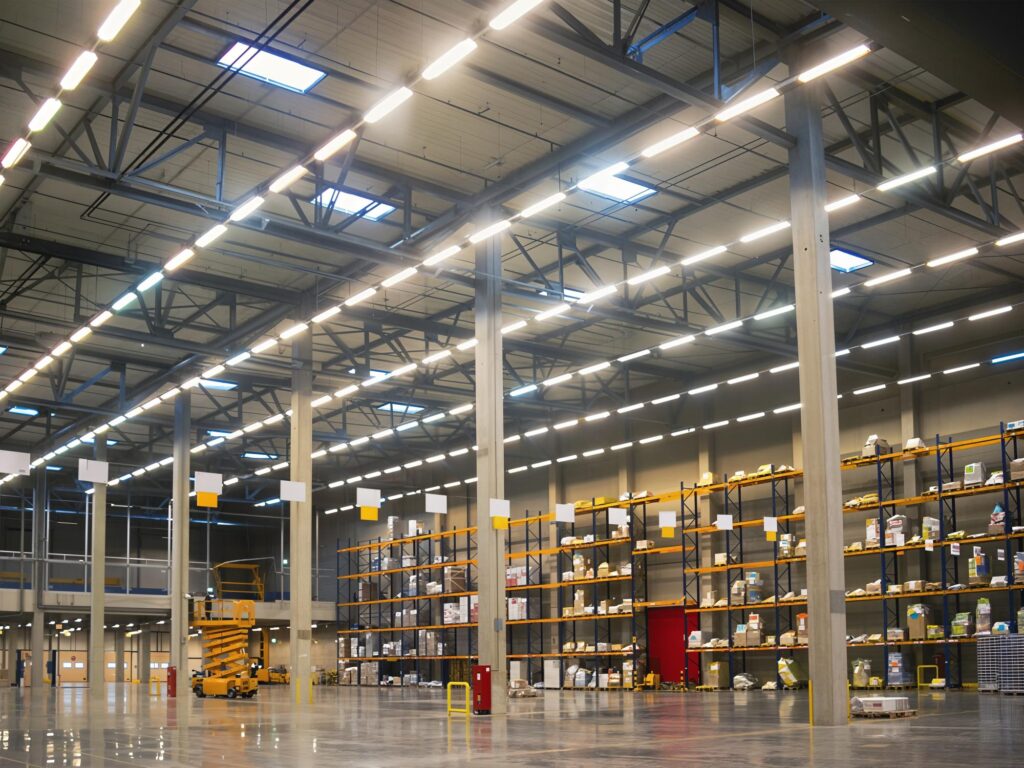
Walk into most warehouses or retail spaces after hours and count the lights still burning. That’s not a rounding error on your electricity bill. It’s one of the largest controllable business expenses on your P&L, and the one with the fastest payback when you upgrade.
Legacy metal halide high bays in warehouses and retail spaces typically draw 400W per fixture and need replacing every one to three years. A 150W LED equivalent delivers comparable or superior lumen output at 60–80% lower energy consumption, with a lamp life of 50,000–100,000 hours. Maintenance costs effectively disappear.
The maths scales quickly. A 200-fixture warehouse running 400W metal halides for 4,000 hours annually consumes roughly 320,000 kWh. That’s approximately $80,000 at commercial rates. Replacing those with 150W LEDs and adding occupancy sensors drops consumption to around 96,000 kWh, cutting the annual bill to roughly $24,000. With relamping savings on top, the total payback sits well under two years.
There’s a secondary benefit that ties directly back to the building envelope. Metal halide fixtures generate intense heat. They’re essentially internal space heaters suspended from the ceiling. Removing them reduces the thermal load on your HVAC system, compounding energy savings from any shading or insulation you’ve already implemented.
Several state-level programs subsidise LED upgrades for businesses. Victoria’s Energy Upgrades (VEU) programme, extended to 2045, provides free or heavily subsidised commercial lighting upgrades through accredited providers. South Australia’s Retailer Energy Productivity Scheme (REPS) offers similar incentives. Check what’s available in your state, because the out-of-pocket cost may be significantly lower than you’d expect.
Commercial Solar in Perth
A 100 kW rooftop system in Perth generates enough power to offset $45,000 or more from your annual electricity bill, and the maths behind that figure is straightforward.
The Bureau of Meteorology records average daily global solar exposure of 18–20 MJ/m² across the Perth metropolitan area, translating to roughly 4.8–5.2 peak sun hours per day on an annual basis. A well-sized 100 kW system generates approximately 140,000–153,000 kWh annually. At Synergy’s L1 tariff of 32.24c/kWh, that’s roughly $45,000–$49,000 in avoided grid electricity per year, assuming 80% or more of the generation is consumed on-site during business hours.
System costs have fallen sharply. A 100 kW commercial system in Perth typically costs $95,000–$120,000 installed, with federal Small-scale Technology Certificates (STCs) knocking $8,000–$12,000 off the upfront price. Payback periods of two to four years are achievable for businesses with high daytime energy consumption. Retail, hospitality, manufacturing, and cold storage are prime candidates.
One time-sensitive factor: the STC scheme is winding down. The federal rebate is calculated based on a deeming period, essentially, how many years of future energy production the government credits you for upfront. That period dropped from six years to five in 2026, which means a smaller discount at the point of sale, and it shrinks further each year until the programme expires on 31 December 2030 Systems above 30 kW inverter capacity also need to go through a Western Power approval process, which includes a network engineering study. That adds roughly $12,000–$18,000 to the project cost. Factor that into your timeline.
Solar pairs exceptionally well with roller shutters and LED upgrades. The shutters reduce your cooling load, the LEDs cut your lighting load, and the solar array offsets whatever’s left.
Smart Timers and Automation
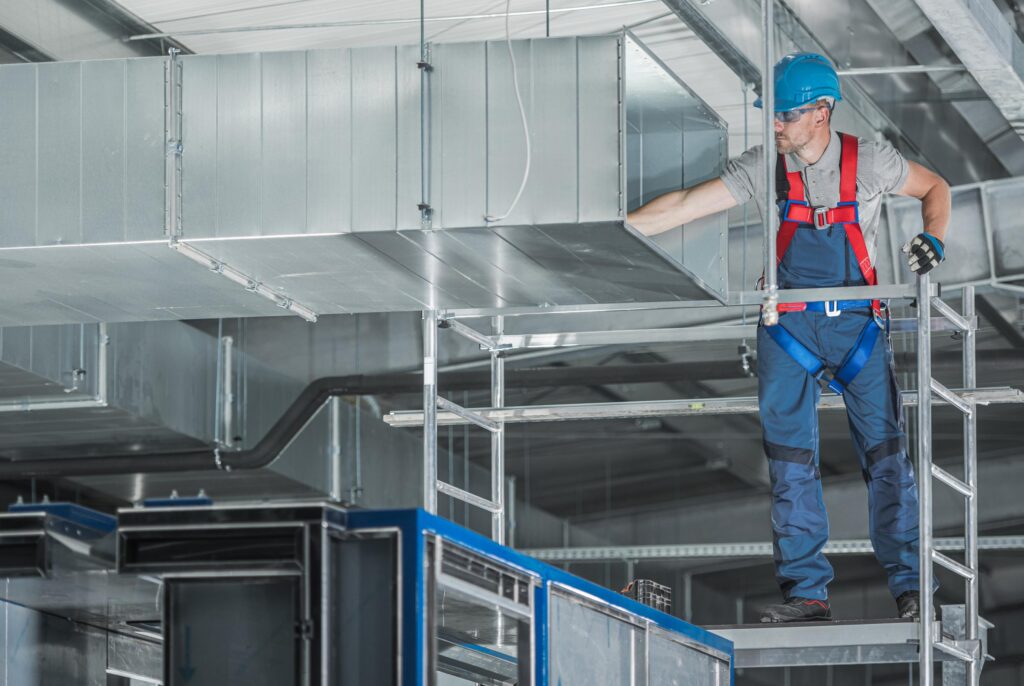
The most expensive energy is the energy you use when nobody’s there.
Smart timers and building automation systems eliminate that waste by controlling exactly when high-draw equipment operates. Programmable digital timers can shift non-essential loads (external signage, water pumps, hot water systems, storage area lighting) to off-peak periods, capturing substantial rate differentials. Peak electricity rates in WA can exceed 36c/kWh; off-peak rates are considerably lower. Simply timing your loads correctly, without reducing total consumption, can shave 5–10% off your bill.
HVAC automation takes this further. Pre-cooling a well-insulated commercial building during cheaper early-morning hours, then allowing the thermal mass and external roller shutters to hold that temperature through peak afternoon pricing, reduces peak demand charges and total energy consumption simultaneously. Industry data suggests commercial HVAC automation delivers 10–30% energy savings, with payback periods of two to five years.
When you combine automated shutters, LED lighting with occupancy sensors, and scheduled HVAC operation, each system reduces the load on the next. The effect compounds over time — and that compounding is what separates businesses that nibble at their overheads from those that genuinely reduce costs.
Tax Deductions and Write-Offs
Most of the strategies above pay for themselves through savings, but this next one pays you back through the tax system.
The ATO confirms that the $20,000 instant asset write-off remains available for eligible small businesses (aggregated turnover under $10 million) for assets first used or installed ready for use between 1 July 2025 and 30 June 2026. That means a commercial roller shutter, an LED lighting array, or a smart timer system costing under $20,000 can be deducted in full in the year of purchase. No complex depreciation schedules required.
For assets above that threshold, motorised roller shutters have a 10-year effective life under Division 40 of the Income Tax Assessment Act. In practice, that means you can claim 10% of the cost each year using the prime cost method, or 20% using the diminishing value method. This applies to the motorised components: the motor, controls, and automation hardware.
These deductions directly reduce your taxable income. Combined with the ongoing energy savings, insurance reductions, and avoided repair costs, the effective cost of a security and energy upgrade drops well below the sticker price. For any business owner genuinely looking at how to cut costs in business, the tax treatment alone changes the maths.
Where Roller Shutters Fit In
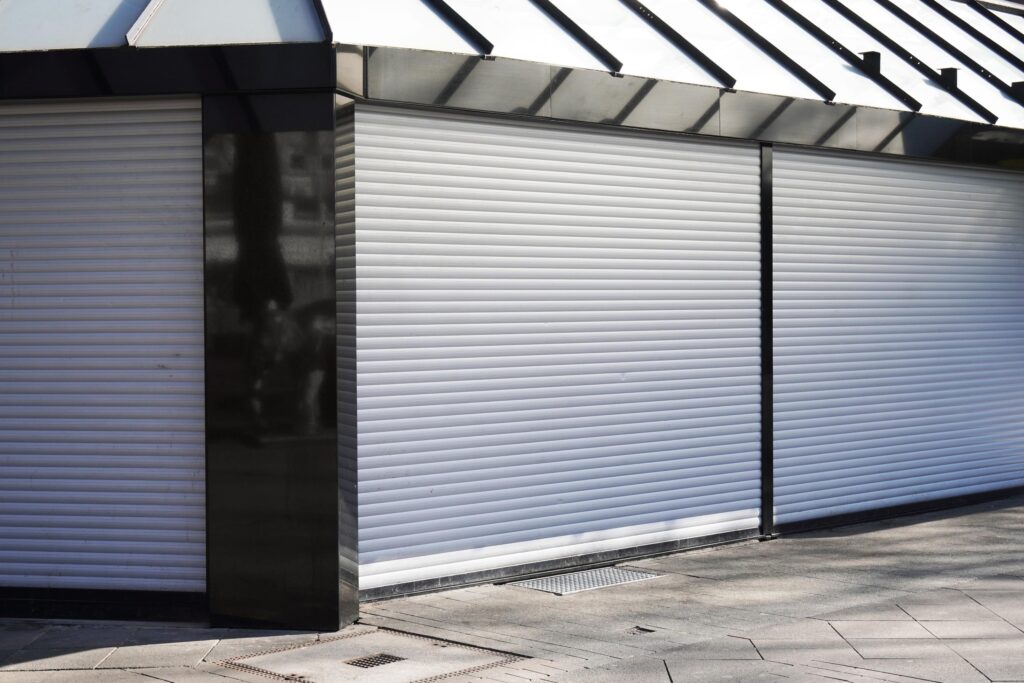
Every strategy in this guide works independently. Stacked together, they create a compounding financial advantage that grows every year. And roller shutters sit at the centre of that stack, touching energy costs, security risk, insurance premiums, weather protection, and asset value simultaneously. For a detailed breakdown of every return they deliver, see our guide on the benefits of roller shutters for your business.
MCF Master Group is a family-owned, owner-operated business based in Perth. That means when you call us, you deal with the owner from the first conversation through to the final installation. Which means we can say with certainty that you won’t get passed between a sales rep and a subcontractor you’ve never met.
We manufacture through Rollashield using German roll-forming technology and handle everything in-house: measuring, fabrication, installation, and electrical work. Our range includes commercial roller shutters for shopfronts and warehouses, residential roller shutters for homes, the LOCKSAFE™ integrated deadlocking system for maximum security, and smart-home integrated shutters that automate your climate control. Every product is Australian-made, backed by a 10-year warranty on motors and components, and installed by qualified electricians.
If you’re not sure where to start, that’s what the first conversation is for. Get in touch for a free, no-obligation site assessment, and we’ll walk your property, identify where the savings are, and match the right solution to your premises. You can also call us directly on 0448 308 831.
Frequently Asked Questions
How much can roller shutters save on energy bills for a business?
External shading devices like foam-filled aluminium roller shutters can block up to 90% of solar heat gain through windows, according to the Australian Government’s YourHome guide. Given that HVAC accounts for approximately 39% of total energy in Australian commercial buildings, reducing that load by even 25–30% translates to meaningful annual savings. NatHERS-accredited modelling showed 27–34% reductions in heating and cooling energy when roller shutters were deployed.
Do roller shutters actually deter break-ins?
Yes. Research from the Australian Institute of Criminology (Trends & Issues No. 489) confirms it directly. Active burglars interviewed as part of the DUMA programme identified roller shutters and security screens as effective deterrents that influenced their target selection. The physical barrier, combined with the time, noise, and specialist tools required to breach one, makes most premises not worth the effort.
What is the instant asset write-off, and does it apply to roller shutters?
The ATO’s $20,000 instant asset write-off allows eligible small businesses (under $10 million turnover) to immediately deduct the full cost of individual assets under $20,000, provided they’re first used or installed ready for use between 1 July 2025 and 30 June 2026. Roller shutters, LED lighting systems, and smart timers can all qualify. For assets above $20,000, automatic window shutters are depreciable over 10 years under Division 40.
How long does a commercial solar system take to pay for itself in Perth?
With Perth averaging 4.8–5.2 peak sun hours daily and commercial electricity at 32.24c/kWh (Synergy L1 tariff), a well-sized system with high daytime self-consumption typically pays for itself in two to four years. Federal STC rebates further reduce the upfront cost, though the scheme is phasing out and expires in 2030. The sooner you install, the larger the rebate.
Is it worth upgrading to LED lighting if my business already has fluorescent?
In most cases, the payback is under two years. LEDs consume 60–80% less energy than fluorescent or metal halide alternatives and last five to ten times longer, eliminating relamping costs. They also generate far less heat, which reduces the load on your air conditioning. Several state programmes, including Victoria’s VEU and South Australia’s REPS, subsidise commercial LED upgrades, potentially reducing your out-of-pocket cost to near zero.