Skip to content
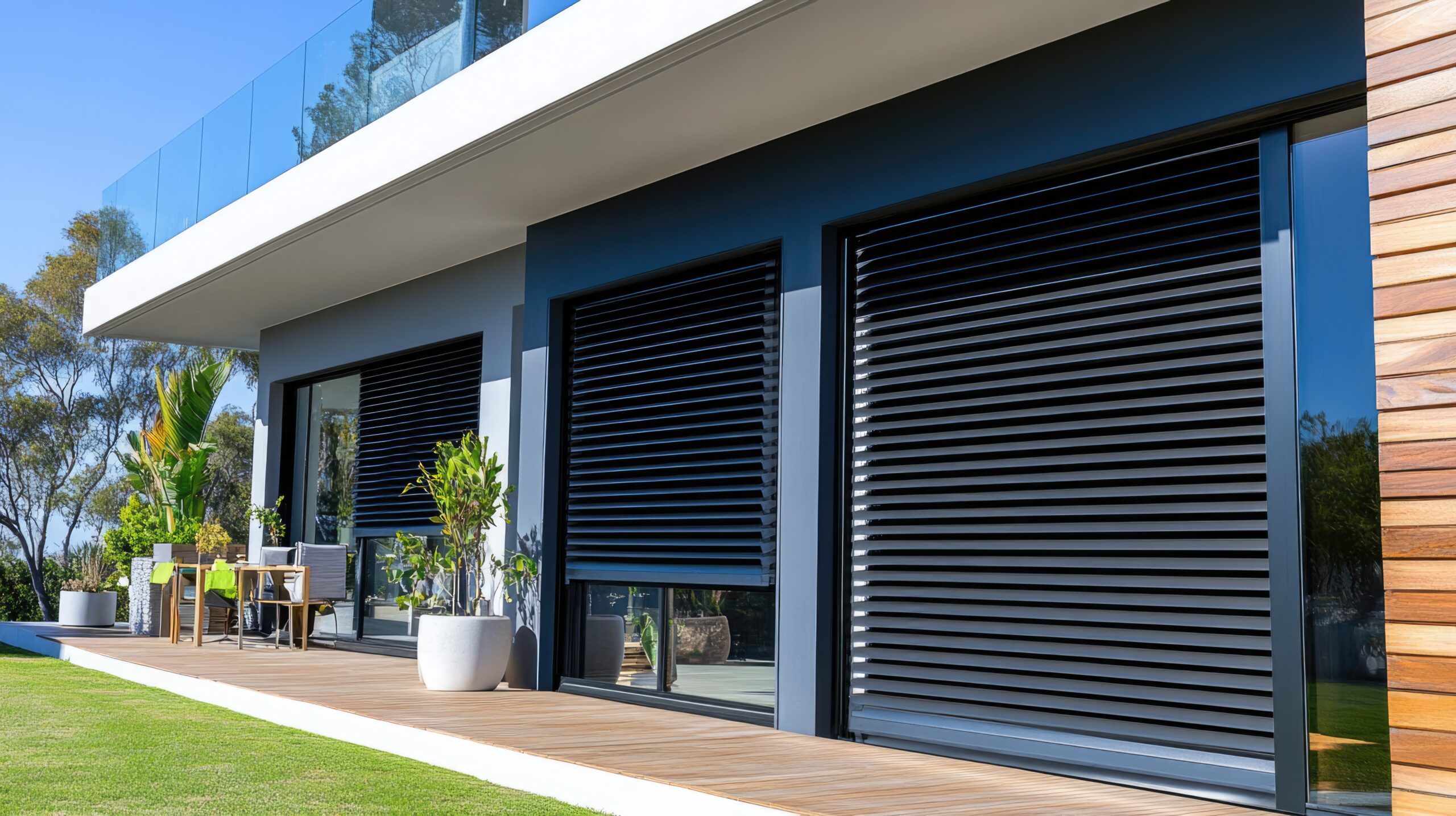
Your air conditioner is working overtime. Your electricity bill looks like a mortgage payment. And that west-facing bedroom? Forget about it after 2 pm.
If you’ve been searching for ways to keep your Perth home cooler without running the AC into the ground, you’ve probably stumbled across roller shutters. But do they actually work, or is “up to 90% heat reduction” just marketing spin?
We install roller shutters across Perth every week. We’ve seen the before-and-after temperature readings. We’ve heard customers tell us their energy bills dropped by a quarter in the first summer. So let’s cut through the noise and give you the real story.
The quick version
Yes, roller shutters keep heat out, and they do it better than almost any other window treatment. Here’s what the research shows:
- Up to 90% heat transfer reduction — supported by NatHERS modelling and cited by the Australian Government’s Your Home guide
- Rooms stay 4–10°C cooler — the NSW Government documented a case study where homeowners reported a 10-degree indoor temperature drop
- 25–40% savings on heating and cooling costs — according to NSW Government research on external shading
- Windows cause up to 87% of heat gain in Australian homes (Your Home), so addressing them makes the biggest difference
Roller shutters stop heat before it reaches the glass. That’s the key difference between external shading and internal options like blinds or curtains. Blocking heat outside the window beats trying to manage it once it’s already inside.
How roller shutters actually block heat
Three things work together to keep your home cooler.
Reflective aluminium
Aluminium reflects the vast majority of radiant heat. A peer-reviewed study published in ScienceDirect measured aluminium’s total reflectivity at around 86% in the visible spectrum and 97% in the near-infrared range, the wavelengths that carry heat energy. When sunlight hits your shutters, most of that energy gets reflected straight back into the atmosphere instead of warming up your window glass.
Foam-filled insulation
Residential roller shutters use double-walled aluminium slats filled with polyurethane foam. PU foam has extremely low thermal conductivity (around 0.022–0.035 W/m·K according to engineering data), making it one of the best insulating materials you can put on a window.
The air gap effect
When you close your shutters, you create a trapped pocket of air between the shutter and the glass. Still air is a surprisingly good insulator, the same principle behind double glazing, except you’re adding it to the outside of your existing windows.
For this to work properly, the shutter needs to fit well. Tight side guides, brush seals, and a solid bottom bar keep that air pocket sealed. Gaps mean air movement, and air movement means heat transfer.
What temperature drop can you expect?
The data is consistent across multiple sources.
Conservative industry estimates suggest 4–8°C cooler indoor temperatures. Research published by the World Health Organisation indicates 8–10°C reductions are achievable during heatwave conditions. The most credible Australian figure comes from the NSW Government’s Climate and Energy Action website, which documents homeowners who reported their shutters “cut the temperature in the house by about 10 degrees.”
NatHERS computer modelling tested roller shutters on homes in Sydney, Melbourne, and Perth. The University of New South Wales provided floor plans for the study, and results showed a 27–34% reduction in whole-year heating and cooling energy.
The catch? These results assume you use the shutters correctly. Closing them before the sun hits the window matters.
How shutters compare to other options
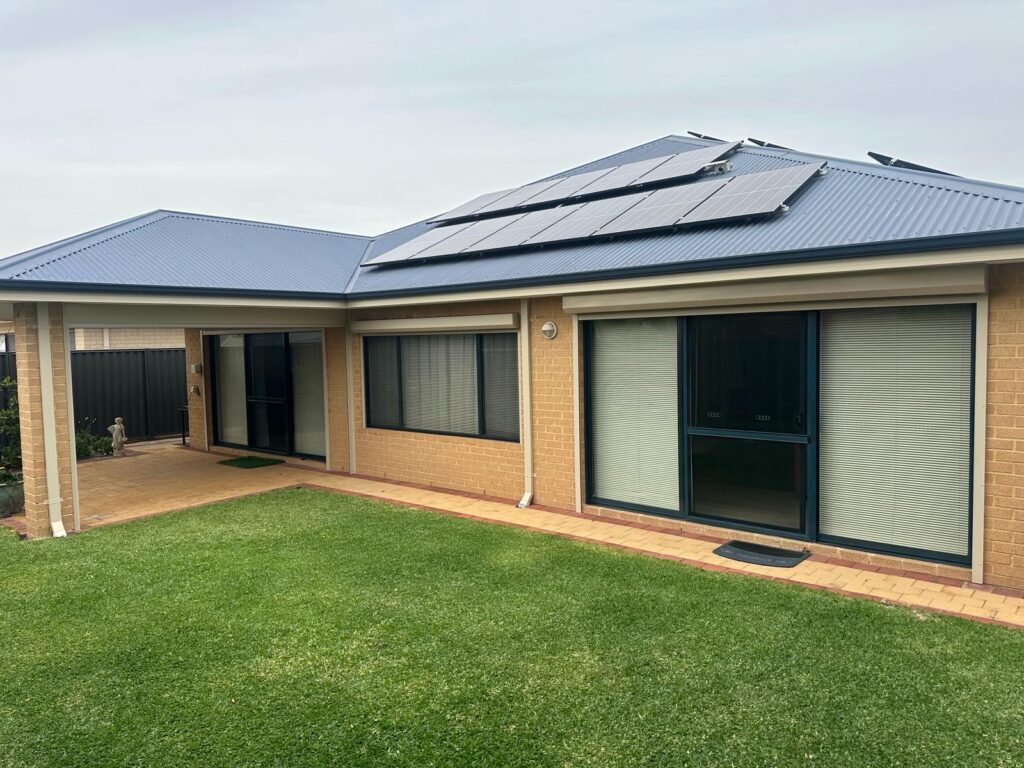
External roller shutters sit at the top for heat control, blocking up to 90% according to Your Home. External fabric blinds come close at 80–95%, though they don’t offer the same security or noise benefits. Awnings manage 65–77% but struggle with east and west-facing windows where the sun comes in at a lower angle.
Internal options perform significantly worse. Cellular honeycomb blinds, often marketed as the best internal option, top out around 60%. Heavy thermal curtains only block 14–33%.
Sustainability Victoria explains why: “External shading is much more effective at keeping your home cool than internal blinds or curtains, as it stops the heat reaching the glass.” When sunlight passes through glass, it converts to trapped heat. Internal blinds try to manage that heat after it’s already inside, far less effectively.
What about double glazing?
Double glazing reduces heat transfer through conduction and convection, but it doesn’t stop radiant heat; direct sunlight still passes through. Roller shutters block solar radiation before it reaches the glass.
Research by Glasgow Caledonian University for Historic Scotland found that combining secondary glazing with shutters reduced heat loss by 75% and achieved a U-value of 1.1 W/m²K, significantly better than either solution alone.
If you can only afford one, shutters typically deliver better value in Perth’s climate. We have mild winters and brutal summers; the priority is keeping heat out.
Why Perth homes benefit most
Perth isn’t just hot, it’s relentlessly sunny.
According to Bureau of Meteorology data, Perth receives over 3,200 hours of sunshine annually, making it Australia’s sunniest capital. Summer UV Index regularly hits 12 (the highest “extreme” classification). Perth averages 26 days above 35°C each year, with roughly 5 days exceeding 40°C.
The east and west window problem
Eaves and pergolas work for north-facing windows because they block high-angle midday sun. But morning and afternoon sun come in at a lower angle, and it goes under fixed overhangs. Sustainability Victoria notes that “eaves, pergolas and even verandahs are not very effective at shading east and west windows.”
Roller shutters provide complete coverage regardless of sun angle.
Working with the Fremantle Doctor
Perth’s famous afternoon sea breeze creates an opportunity for smart shutter use. Close east-facing shutters in the morning, west and north before midday. When the Doctor arrives (typically between 10 am and 3 pm in summer), open shutters to let cooling air through. Close again in the evening to trap cooler air inside.
Smart home shutters can automate this cycle based on timers or temperature sensors.
Energy savings and running costs
The numbers from Australian sources are consistent.
Your Home (the federal government’s sustainable housing guide) states that effective shading can reduce cooling costs by 30–40%. The NSW Government claims external shading can save 40% per year on heating and cooling bills. NatHERS testing showed a 27–34% reduction in whole-year energy consumption.
For dollar figures, Australian industry sources citing CSIRO testing report that foam-filled aluminium shutters can cut heating and cooling bills by $350–$500 per year in climates similar to Perth and Adelaide. One Wangara family reported their energy bills dropped nearly 25% in their first summer with electric shutters.
Choosing shutters that actually perform
Foam-filled vs hollow
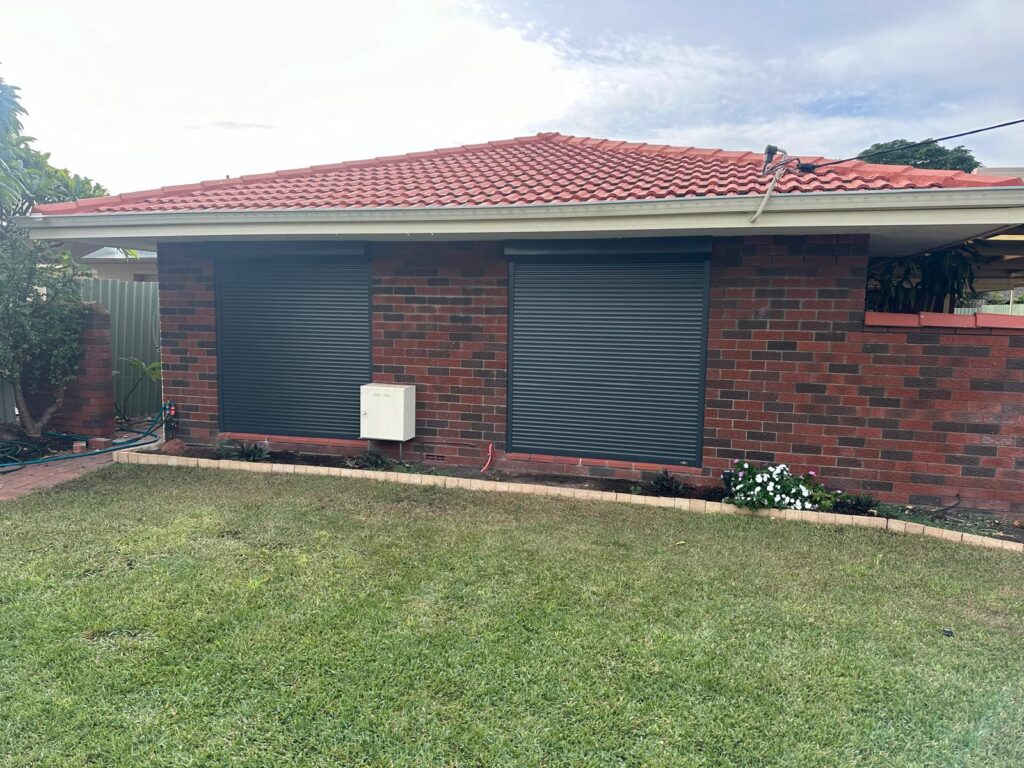
This is the biggest factor. Hollow extruded slats are essentially just a metal skin; they conduct heat and provide minimal insulation. Foam-filled slats genuinely block heat transfer. The 90% reduction claims only apply to foam-filled construction.
Slat profile and colour
Bigger profiles mean more foam volume. Standard 42mm works for most windows; 77mm widespan shutters provide maximum insulation for large openings.
Light colours reflect more heat. The NatHERS Assessor Handbook confirms: “Darker colours absorb heat and lighter colours reflect heat.” White or cream outperforms charcoal, especially on west-facing windows.
What else you get
Foam-filled shutters cut external noise by 20–25 decibels; MCF shutters reduce sound transfer by up to 50%. For homes near busy roads, that’s a genuine quality-of-life improvement.
The LOCKSAFE roller shutters feature a patented 3-step anti-lift locking system for security. Most Australian insurers offer 5–15% premium discounts for compliant security shutters.
Wind-rated roller shutters protect against flying debris and hail, with options rated to Category 3 cyclone conditions. Light control provides near-complete blackout, around 96%, ideal for shift workers or FIFO families.
Are they worth it?
A mid-sized window with an electric roller shutter installed costs roughly $1,200–$1,600. Whole-house installation runs $8,000–$15,000.
Based on the government and CSIRO-referenced figures above, annual energy savings sit around $350–$500 for most Perth households. Payback on energy alone is 10–15 years, within the 20–25 year product lifespan.
Australian Property Institute research (2023) found homes with roller shutters sell for up to 15% more than similar homes without. Factor in insurance discounts, avoided storm damage, and the comfort of usable west-facing rooms, and the value equation tips considerably.
Ready to see what shutters can do?
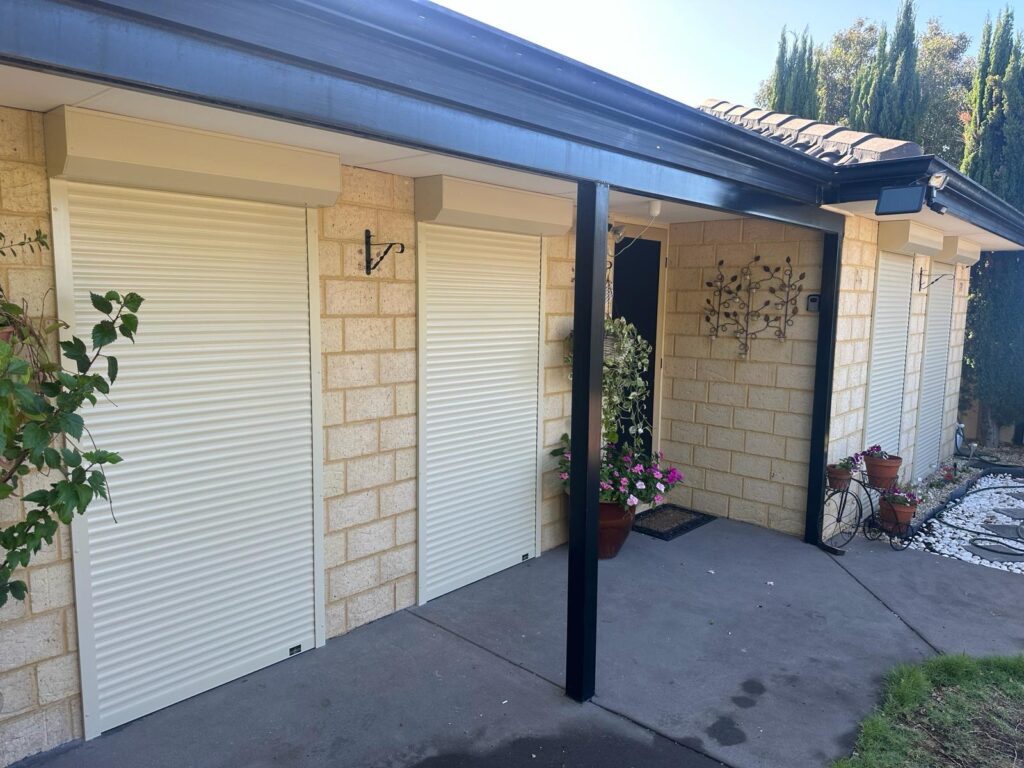
At MCF Master Group, we’re a family-owned Perth business with qualified electricians on staff. We manufacture in Adelaide using German roll-forming technology and handle everything from measure to installation.
We offer free measure and quote, 10-year warranty on motors and components, 2-year workmanship guarantee, and we’ll beat any written quote by 5%. Current offer: $450 off per roller shutter plus free WiFi hub when you install 3 or more.
Book your free measure and quote or call us on 0448 308 831.
Frequently asked questions
Do roller shutters reduce electricity bills?
Yes, typically by 25–40% on heating and cooling costs according to the NSW Government andNatHERS research. Australian industry sources citing CSIRO testing report savings of $350–$500 per year for most households.
How much cooler is a house with roller shutters?
Expect 4–10°C cooler when shutters are closed before the sun hits the windows. The NSW Government documented a case study reporting a 10°C reduction.
Are roller shutters better than blinds for heat control?
Yes, significantly. External shutters block heat before it enters through the glass. Internal blinds only manage heat already inside, which Sustainability Victoria confirms is far less effective.
Do roller shutters work in winter too?
Yes. Shutters reduce winter heat loss by creating an insulating barrier. Glasgow Caledonian University research found shutters alone reduced heat loss by 51%. Open them during sunny winter days to let warmth in, close at night to trap heat inside.
What colour roller shutters are best for heat?
Light colours (white, cream, beige) reflect most heat. The NatHERS Assessor Handbook confirms darker colours absorb more heat, reducing cooling effectiveness.