What You Need to Know Before Reading
- Australia records over 160,000 unlawful entries each year — and roughly 30% target non-residential premises.
- The front door is the most common break-in entry point for commercial properties, accounting for over 40% of forced entries.
- Layered security (combining physical barriers, alarms, cameras, and lighting) can reduce burglary risk by up to 50 times compared to having no security at all.
- Simple, low-cost measures — such as trimming landscaping, upgrading exterior lights, and installing signage — can significantly deter opportunistic offenders.
- Commercial roller shutters are identified by convicted burglars as one of the most effective physical deterrents against break-ins.
Here’s a question most business owners don’t ask until it’s too late: if someone tried to break into your premises tonight, how long would it actually take them?
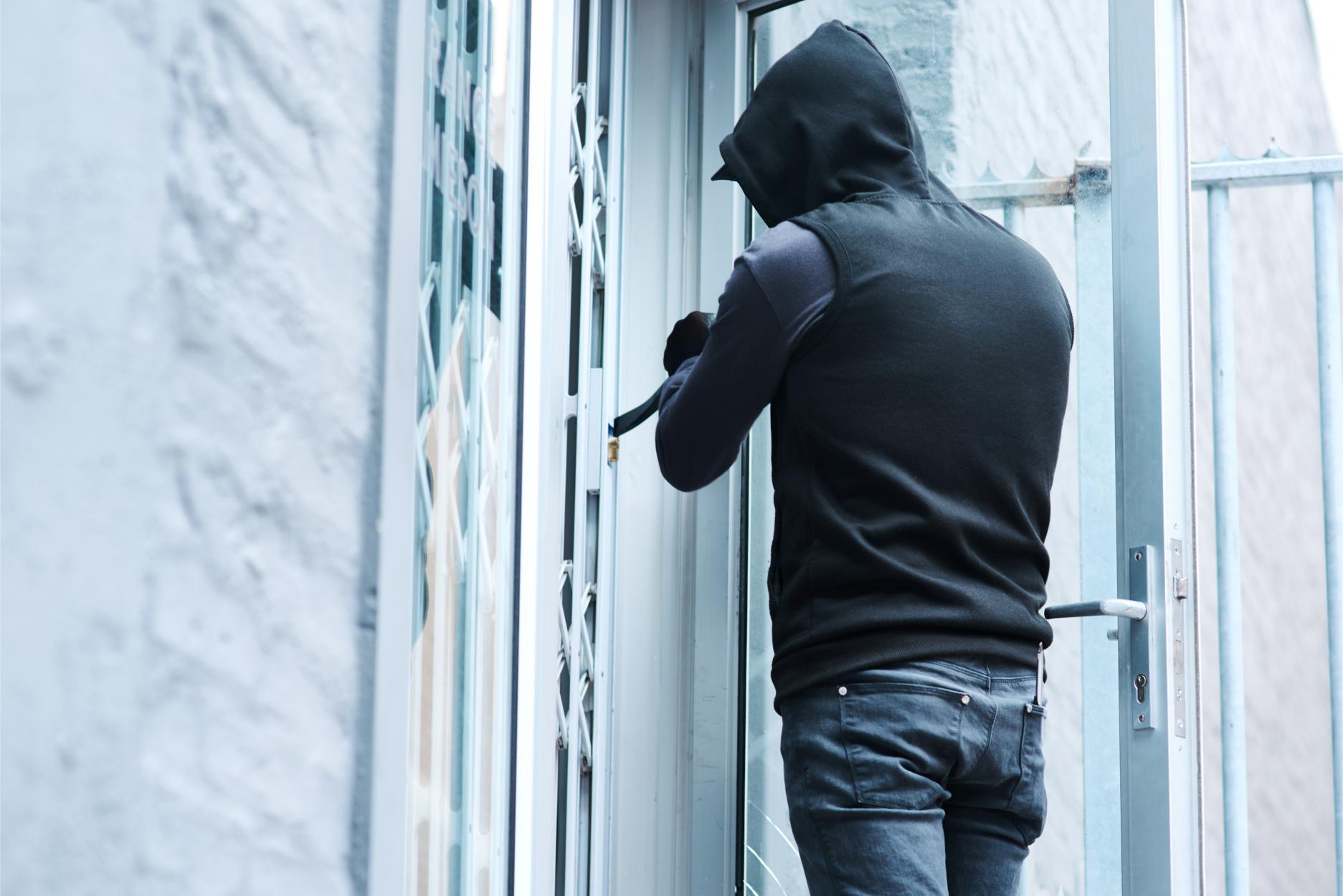
For most commercial properties, the honest answer is uncomfortable. A standard glass shopfront can be breached in under five seconds. A hollow-core door with a residential-grade lock gives way in a single kick. And a siren blaring into an empty industrial estate at 2 a.m. is little more than background noise if no one is listening.
According to the Australian Bureau of Statistics, Australia recorded over 160,000 unlawful entries in 2024 alone. Roughly 30% of those targeted non-residential premises — shops, warehouses, offices, and trades. In Victoria, unlawful entries surged 25% in a single year. The threat is not abstract; it’s statistical, and it’s growing in key regions.
The good news? Most commercial break-ins are preventable. Burglars are rational decision-makers. They weigh effort against reward, and they overwhelmingly choose the path of least resistance. The tips below are designed to make your business the one they walk past.
Why Burglary Prevention Matters More Than You Think
The stolen inventory is rarely the most expensive part of a break-in. It’s everything that follows.
A forced entry typically means damaged doors, shattered glass, and disrupted operations — sometimes for days. For small and medium businesses, that downtime can be devastating. Research from the Australian Institute of Criminology estimates that burglary costs the Australian economy over $2.2 billion annually, with individual incidents averaging around $2,900 in direct losses before you factor in repairs, lost trade, or increased insurance premiums.
Then there’s the less visible damage. Insurance premiums spike after a claim — and repeated incidents can lead to policy cancellation entirely. Staff who feel unsafe become disengaged and are more likely to leave. Customers who hear about a break-in may question whether their own vehicles or belongings are secure on your property. The ripple effect touches every corner of the business.
That’s precisely why prevention isn’t just a security concern — it’s a business continuity strategy. And it doesn’t require a six-figure security overhaul. It requires the right measures, applied in the right combination, to the right vulnerabilities.
10 Proven Tips to Prevent Burglary for Your Business

1. Start With a Security Risk Assessment
Before spending a dollar on hardware, walk your property with fresh eyes — or better yet, through the eyes of someone looking for a way in. A proper security risk assessment identifies the specific vulnerabilities your premises face, rather than applying a generic checklist.
Consider your location. Are you on a main road with high foot traffic, or tucked away in an industrial park that empties after 5 p.m.? Is your rear entrance visible from neighbouring properties, or does it back onto a laneway? The WA Police Business Security Audit checklist is a free, practical tool for identifying blind spots in your perimeter, building envelope, interior, and operational procedures.
Pay particular attention to your entry points. Data from the Crime Statistics Agency Victoria reveals that the front door accounts for over 40% of commercial break-in entry points, followed by windows at roughly 17%. Your assessment should focus resources on these high-probability targets first.
2. Upgrade Your Exterior Lighting
Lighting is one of the most cost-effective deterrents available, yet it’s routinely underestimated. A well-lit perimeter removes the cover of darkness that most burglars depend on.
A meta-analysis of 17 international studies published by the Swedish National Council for Crime Prevention found that improved exterior lighting led to a 14% decrease in crime overall and a 12% reduction in property offences specifically. Motion-activated LED floodlights are particularly effective because the sudden transition from darkness to bright light creates a “startle effect” — signalling to the intruder that they’ve been detected while simultaneously drawing the attention of anyone nearby.
Focus on rear entrances, loading docks, car parks, and any recessed doorways. Use high-CRI white LED lighting rather than yellow sodium lamps — white light allows witnesses and cameras to accurately identify colours of vehicles and clothing, which is critical for investigations.
3. Install Visible Security Cameras
The evidence on CCTV is clear: cameras deter crime, and they deter it measurably. A comprehensive meta-analysis reviewed by the Victorian Government’s crime prevention unit found that surveillance cameras caused a 13% reduction in crime in areas where they were deployed.
The key word is visible. Cameras work best as deterrents when potential offenders can see them. Position units at eye level near entry points (not just high on ceilings) to capture facial identification, and ensure they cover the perimeter, car park, and any point-of-sale areas. Modern systems with 4K resolution and low-light colour sensors provide evidence-grade footage even in near-darkness — a critical advantage given that non-residential burglaries in Victoria peak between 6 p.m. and midnight.
Cloud-backed storage is worth the investment. Experienced burglars know to look for and destroy local recording devices. A cloud or hybrid system ensures your footage survives even if the physical recorder is stolen.
4. Reinforce Your Doors, Frames, and Locks
With over 40% of commercial break-ins occurring through the door, this is arguably the single most impactful upgrade a business can make. Yet the door itself is only as strong as its weakest component.
Door material matters
Exterior doors should be solid-core timber, steel, or aluminium. Hollow-core doors — common in residential fit-outs — offer almost no resistance to forced entry. Any glazed panels in the door should be fitted with laminated glass or polycarbonate to prevent the “reach-through” technique, where an offender breaks the glass to unlock the door from inside.
Frame reinforcement is equally critical
A heavy-duty strike plate secured with long screws (75 mm minimum) into the wall stud — not just the decorative trim — prevents the frame from splitting when kicked. For outward-swinging doors, ensure hinge pins are non-removable or fitted with security studs.
When selecting locks, look for products that comply with AS 4145.2, the Australian Standard for mechanical locksets. Commercial-grade deadbolts with a minimum 25 mm throw and hardened steel inserts are the baseline for any business exterior. Victoria Police specifically recommends solid doors with steel jambs and commercial-grade locks as foundational business security measures.
5. Protect Your Windows and Shopfronts
Standard plate glass shatters on impact and offers zero resistance to entry. Tempered glass is stronger, but once breached, it crumbles completely — clearing the opening instantly. Neither provides meaningful security against a determined intruder.
For retail storefronts where visibility is important, security window film is a practical retrofit solution. A heavy-duty polyester film applied to the interior surface holds broken glass together in a flexible sheet, forcing a burglar to spend one to three minutes battering through rather than gaining instant access. That delay is often enough to disrupt a smash-and-grab timeline.
For higher-risk premises, laminated glass (similar in construction to a car windshield) resists sustained impact, while polycarbonate glazing offers impact resistance roughly 250 times greater than standard glass. The right solution depends on your threat level, budget, and whether aesthetics are a priority.
6. Invest in a Monitored Alarm System
An unmonitored alarm that simply sounds a siren is, in practice, a notification to nobody. In a commercial district that empties after hours, or an industrial estate with no residential neighbours, a siren can ring for hours without generating a single call to police.
Professionally monitored systems connect to a 24/7 central monitoring station. When triggered, trained operators can verify the alarm via video feed and dispatch police directly. This verification step is significant: police consistently prioritise verified alarms over unverified “blind” signals, which suffer from high false-alarm rates and are often deprioritised.
Insist on dual-path communication — a system that uses both a hardwired internet connection and a cellular backup. Savvy offenders will attempt to cut phone and internet lines before entry. A dual-path system instantly switches to cellular if the primary line is severed, ensuring the alarm signal gets through regardless. Systems should comply with AS/NZS 2201.1, the Australian Standard for intruder alarm design and installation.
7. Tighten Employee Access Controls
The threat isn’t always external. Controlling who can access your premises — and when — is a foundational security principle that many businesses overlook.
Start with the basics: every employee should have a unique alarm code. Shared codes eliminate accountability and make it impossible to trace who disarmed the system and when. Codes must be deactivated immediately when someone leaves the business. The same applies to physical keys — standard keys can be duplicated at any hardware store without authorisation, so consider restricted or patented key systems that require dealer verification to copy.
Digital access control (RFID fobs, mobile credentials, or biometrics) takes this further by providing a complete audit trail of every entry attempt. Lost cards can be deactivated instantly, and access can be restricted to specific hours — preventing unsupervised after-hours entry. Safe Work Australia identifies electronically controlled doors as a recommended control measure for managing workplace security risks.
8. Use Security Signage Strategically
This one costs almost nothing, yet research consistently shows it works. Signage communicates guardianship. It tells a potential offender that this property is watched, monitored, and will respond.
Signs stating “24-Hour CCTV Surveillance,” “Alarm Monitored,” or “No Cash Kept on Premises” directly address a burglar’s risk-reward calculation. Research from the Australian Institute of Criminology found that active burglars routinely scout targets to assess security measures before committing to a break-in. Visible signage raises their perceived risk of apprehension.
Place signs at perimeter boundaries, all entry points, and near high-value zones. Critically, maintain them. Faded, cracked, or graffiti-covered signage signals neglect — which can actually invite crime rather than prevent it.
9. Maintain Your Property and Landscaping
A neglected property is an invitation. The principle behind this is well established in criminology and forms the backbone of Crime Prevention Through Environmental Design (CPTED) — a framework adopted by police services across Australia, including detailed guidelines published by Queensland Police and NSW Police.
Keep shrubs trimmed below one metre and tree canopies above two metres to maintain clear sightlines. Overgrown vegetation near windows and doors provides concealment for an offender prying open a lock. Remove ladders, pallets, and tools from the exterior — these are ready-made breach equipment if left accessible. Replace burnt-out lights promptly, repair broken fences immediately, and remove graffiti quickly. Every sign of active management tells a potential intruder that this property is watched.
10. Install Commercial Roller Shutters
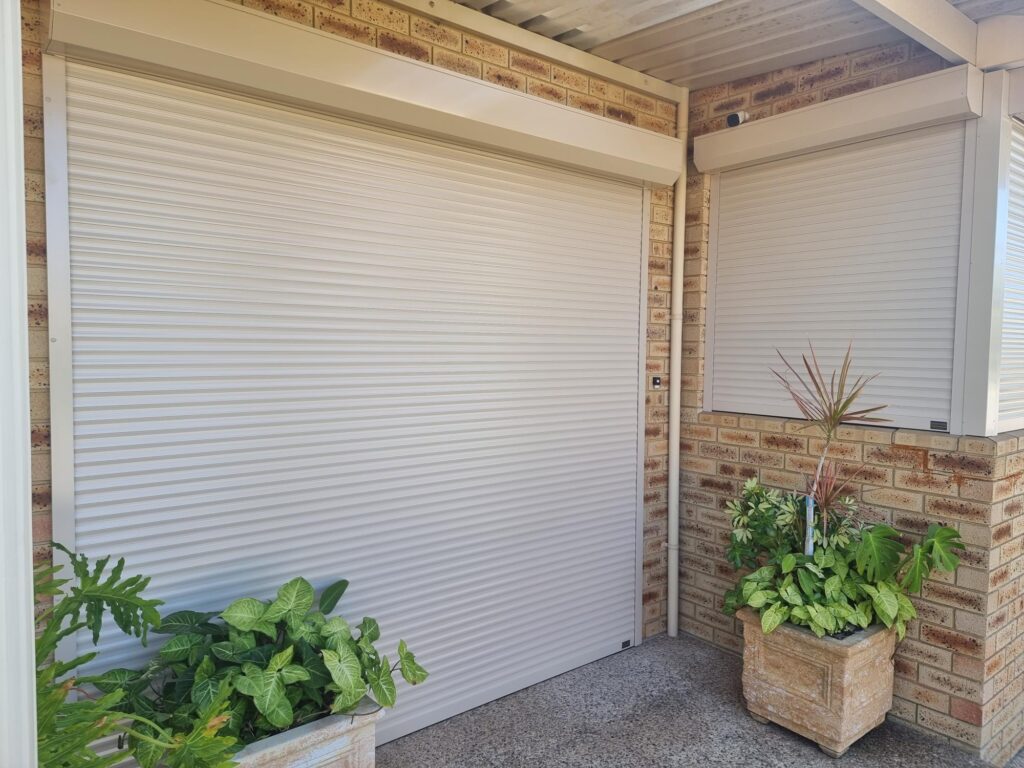
When it comes to outright physical denial of entry, few measures match the effectiveness of commercial roller shutters. Unlike film, signage, or alarms — which delay, deter, or detect — a solid roller shutter physically blocks access to doors, windows, and shopfronts.
This isn’t just theory. Research published by the Australian Institute of Criminology found that convicted burglars specifically identified roller shutters as one of the most effective deterrents they encountered. When an offender sees a roller shutter, the calculation shifts immediately: the time, noise, and specialist tools required to breach one make most targets simply not worth the effort.
For businesses looking for a proven, Australian-made solution, MCF Master Group’s commercial roller shutters are purpose-built for this job. Their range includes heavy-duty extruded aluminium security roller shutters and the LOCKSAFE™ system, which features an integrated locking mechanism that eliminates the need for external padlocks — removing yet another potential point of attack. If you’re unsure which style suits your property, their guide on types of roller shutters is a useful starting point.
Why Layered Security Is the Real Secret
No single measure is bulletproof on its own. An alarm without physical barriers gives an intruder free reign until responders arrive. A reinforced door is meaningless if the window beside it shatters in one hit. Cameras record the crime, but they don’t prevent it.
The evidence overwhelmingly supports a layered approach. A landmark peer-reviewed study published in the Security Journal found that combining window locks, interior lights on timers, deadlocks, and external sensor lighting produced approximately 50 times lower burglary risk than having no security whatsoever. Individual devices provided up to three times the protection — but stacking them multiplied the effect dramatically.
Think of your security as a chain of decisions the burglar must work through. Each layer — lighting, signage, cameras, locks, shutters, alarms — adds time, noise, and risk to their calculation. The goal isn’t perfection. It’s to make your business harder than the one next door.
For more foundational advice on protecting your premises, see our comprehensive guide on burglary prevention tips to keep your property secure.
Secure Your Business With MCF Master Group

Here at MCF Master Group, we’re a Perth-based specialist in commercial roller shutters and electrical services, helping Australian businesses harden their premises against break-ins. From heavy-duty extruded aluminium shutters to smart-home integrated solutions, every product is built to Australian standards and installed by qualified professionals.
If your business is overdue for a security upgrade, get in touch with our friendly team for a no-obligation consultation because the best time to prevent a break-in is before it happens.
Frequently Asked Questions
What is the most common entry point for business burglaries?
The front door. Data from the Crime Statistics Agency Victoria shows that doors account for over 40% of commercial break-in entry points, followed by windows at approximately 17%. This is why reinforcing doors, frames, and locks is consistently ranked as the highest-impact security upgrade for most businesses.
Do security cameras actually prevent burglaries, or do they just record them?
Both — but prevention is measurable. A meta-analysis reviewed by the Victorian Government found that CCTV caused a 13% reduction in crime in areas where cameras were deployed. The critical factor is visibility: cameras positioned where potential offenders can clearly see them are far more effective as deterrents than hidden units. Modern AI-equipped cameras can also send real-time alerts for after-hours motion, turning passive recording into active monitoring.
Are roller shutters worth the investment for a small business?
For premises with street-facing windows, rear doors, or high-value stock, absolutely. Roller shutters provide outright physical denial of entry, which no alarm, camera, or sign can do alone. The Australian Institute of Criminology’s research confirms that convicted burglars view roller shutters as one of the most effective deterrents. Beyond security, they also offer insulation, noise reduction, and protection against vandalism and severe weather.
How much does a commercial security upgrade cost in Australia?
Costs vary widely depending on the scope. Low-cost measures like security signage, improved lighting, and landscaping maintenance can be implemented for a few hundred dollars. A monitored alarm system typically starts from $40–60 per month. Commercial roller shutters are a larger investment, but the cost is offset by reduced insurance premiums, lower risk of loss, and the protection of business continuity. Most reputable roller shutter installers will provide a free site assessment and quote tailored to your specific vulnerabilities.
Should I choose a monitored or unmonitored alarm system for my business?
Monitored, without question — particularly for commercial premises. An unmonitored siren relies entirely on someone nearby hearing it and choosing to call the police, which is unreliable in commercial districts after hours. A professionally monitored system with dual-path communication (internet plus cellular backup) ensures that a verified alarm signal reaches emergency services regardless of physical tampering. Many Australian business insurers now require monitored systems as a condition of coverage.